Posts

Showing posts with the label Learn

What is our Problem?

 This week Hannah , Clarelle and I have been discussing our collaborative maths inquiry. I am so excited to work with these ladies as I feel we will make a bigger impact working together, looking at a school wide problem. Our overall problem is that our students are performing poorly in mathematics. We need to narrow this down and identify specific issues in this area.  Some of the ponderings we have had so far are: - Do certain areas of maths have larger gaps? -Are the students able to apply their knowledge?  -Why aren't student's choosing the most efficient ways of solving problems? - Do the children have self efficacy? Do they know where they are at/ their next steps? - Are they willing to learn from each other?  To help us to find areas of focus, Hannah has been working on a series of surveys. She has made one for the senior management team, one for teachers and one for the students.  Here is an example, the teacher survey: Teacher survey: Meanwhile, Clarel...
Identifying a Problem

Image
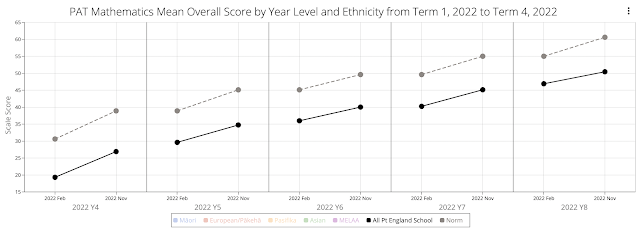
 In my last blog post, I was considering which subject to focus on for my CoL inquiry and came to the conclusion that I should look at Maths. I have since teamed up with Clarelle Carruthers and Hannah Burton to form a collaborative inquiry group. The first step to an inquiry is identifying a problem. I think this evidence is pretty compelling:  This data illustrates the fact that our school's maths data is far behind that of the other Manaiakalani schools. Something needs to change! We have decided to gather data from across the school to try and identify an area of need from a range of year levels. We are hoping this will support us to make a bigger impact on our learners. We will of course still examine our own practice and make changes as per a normal inquiry. The idea being that we all follow a similar approach so that other teachers can replicate it if it is successful.

Making a Comeback

Image
Becoming a mum has definitely been the most rewarding experience of my life, although it has come with new challenges! I have been fascinated with early childhood education, reading studies about language acquisition and early development. I think I can finally see the appeal of teaching young children; their rate of growth is incredible!  I have quite often heard Dr Jannie Van Hees in my head, reminding me to keep conversing with my daughter. "Serve and return". Or Dorothy discussing how many millions of words children should hear before starting school. I guess I can thank them both for my very chatty (loud) girl! I joke, but it has been really helpful to experience these things instead of simply reading about them. Now I have a new surge of energy to bring to the classroom and a new perspective too. I've been relieving and working in new spaces which has given me more insight and eased me back into school life. Throughout term two I spent a lot of time thinking about w...

Enriching Your Reading Programme

What a way to end a term! This morning we fled our classrooms on the promise of coffee, pastries and a day full of professional development at Glen Taylor School. It was a fantastic day full of experts sharing their knowledge on effective reading practice. Ko te Kāhui Ako o Manaiakalani - Dr. Rae Siʻilata and Kyla Hansell   The day kicked off with a keynote by Dr Rae Si'ilata.  This was inspirational. My biggest takeaways were to use more bilingual texts, to broaden my use and understanding of multi-modal texts and how sharing the power in the classroom is so important. I will be looking further into these slides and reflecting more about the provocation in the holidays. Engage the High School Reader with Multimodal Resources - Kerry Boyde-Preece and Maria Krause   This was a fantastic refresher about the use of multi-modal resources, not only to build engagement but to enable students to be more cognitively challenged. This is something I am always interested in; ...

Enhancing Assessment

Image
Assessment is a hot topic in education. Often when we think of assessment we think of end of year, high stakes testing, where our students are allocated a grade. However, Professor Stuart Kime  urges educators to look at assessment instead as a process that is vital for effective pedagogy. Here are my takeaways from Professor Kime's assesment webinar at the Education Hub . Assessment should not be looked at as a singular event or test. Instead it should be seen as a process that produces information that can be used and that is meaningful. Yes, it will involve some sort of testing, but when teachers make sense of this test data and act upon it, their pedagogy is strengthened. Testing is often seen as an end goal - we will assess our students at the end of the unit or year and give them a grade. However, the process of assessment can be used throughout the year. We need to know their starting point; to understand where they are at the moment and how/ what we should tea...

How will my Inquiry Make a Difference?

I am determined to lift the achievement of my students in reading, to the extent that it makes a difference to their Star and PAT Comprehension test results. This is important as our year 7/8 results in both my school and the cluster have shown to be lagging behind the younger year levels. I have started by looking closer into the tests themselves, as I noticed that our running records and in class observations do not always align with the results we get for PAT. I discussed the tests with other teachers, senior management and I've looked at some research. See my blog post about this here. I know from my conversations with the other teachers in my team and Y7/8 teachers across the cluster that this is a common issue. I believe if I can try an approach and demonstrate shift in my end of year PAT and Star data, then I can take my findings to my colleagues. It is important to note that I am not looking for a new way to teach reading, nor do I believe that we have been doing anythi...

Tool Takeaways from Edtech Auckland

One of the best things about Edtech is picking up new sites, tools or tech tips that can be applied in the classroom. This is a list of some of the useful tools that I have learnt about throughout this summit: The Most Dangerous Writing App This is a cool idea for quick quickwrites. The site gives you a time limit to write and it does not allow you to stop - the second you stop typing, your text will disappear! A bit gimmicky and a red will come up and tell you that you've failed, but it could be fun once in a while. iFake Text Messages This is one of the best fake text messaging sites I've come across. They could be used to show a text conversation between characters or even for a Cybersmart lesson. My Simple Show This is a really cool website which allows you to make a slideshow with voiceover very quickly. It auto selects images for you based on the text, but you can choose your own from their library as well. It's not as creative as making one independently, wi...

Transformative Progress

This afternoon teachers from the Manaiakalani cluster gathered in the hall at Tamaki College to receive feedback about our cluster data from Woolf Fisher. The session started with an introduction from Pat Sneddon. He reminded us of the journey that we have taken; from an initiative that started in 12 schools, the Learn, Create, Share or Manaiakalani model is now live in 100 schools. What a huge achievement! He then delivered the news that the government has now committed to taking it into more low decile schools across the country, with crown funding! It is always helpful to be reminded of where our learners are at as they enter our schools. They can identify and write far less words than the national average. Our new entrant teachers have a massive job helping these learners, and the data shows that their reading is moving relatively quickly, but they are still behind in writing. Interestingly, in the higher year levels, students were making far more progress in writing than the...

Kia pai te kotahi

Image
After seven weeks in the sun, I was eager to get back to school and meet my new class. It was the first time that I got to stay in the same classroom (what a difference that makes!) and my second year at Pt England School. This time I felt confident to draw on my past experiences;  I am familiar with the Pt England way and the norms of the school, so I knew what to expect. As I love getting my students to collaborate, debate and discuss their learning with others, I set a series of team building tasks to build a positive class culture. I linked each task with our theme for the term: Kia pai te kotahi, better together and we used the experiences as a springboard for our discussion about our class treaty. This class were extremely receptive to team building and I was blown away by their confidence in speaking to each other and willingness to work with anyone. In each activity I got them to work in different groups and some even required them to hold hands (which can be quite t...

August Inquiry Update!

I am now just over six months into my MIT inquiry, which focusses on accelerating learning in literacy for students in years seven and eight. I have begun to go around the inquiry cycle once again as I am discussing the term 2 literacy data with my team and responding to it, considering what it means for my inquiry and what adaptations I need to make.    

High Expectations Teaching - Christine Ruby-Davies

Image
Are high expectations important?   Educators who hold high expectations of their learners support their self-efficacy and belief. Whilst pushing their students to engage with challenging material, they are not only supporting higher achievement outcomes, but they are also demonstrating their belief in their learners, which in turn supports the students belief in themselves.

Plan for what's in front of you; James Hopkins

Image
Are we using the opportunity to teach rich conceptual understandings or are we simply teaching factual information? James Hopkins challenges educators to teach the 'why' and cater it to the 'who', as opposed to focussing simply on the 'what', or teaching a series of facts. For example, many educators 'cover' the Treaty of Waitangi, by encouraging students to learn the main facts of the event, as opposed to looking at it through a conceptual lense and posing deeper questions, such as how it is relevant in 2018, who benefited etc. But we are still concerned with curriculum coverage, of covering content. When we plan we focus on our curriculum achievement objectives, but rarely do we visit the key competencies or values when we flick through the curriculum document. James asked us to highlight a piece of our planning indicating where we were teaching content, behaviour and skills. As a group, we noted the large amount of 'content' in our pl...

Keynote 2: Once Upon Our Time

Image
 Lindsay Wesner's keynote was about storytelling. She began with her own story, one not to disimilar to my own; a little girl who grew up with very little access to technology and who was greatly challenged when she was asked to use it a school. However, Lindsay began her teaching career at the blackboard using worksheets and exercise books. At the time this was the norm, she was respected by her colleagues and her students experienced success. Then she found herself lost in a 1:1 Macbook class. This could have very easily been me; I learnt basic IT skills at high school, but I would have struggled in a 1:1 classroom had it not been for the professional development I gained from the Manaiakalani Digital Teaching Academy. It was great to hear Lindsay's story as it reminded me of how far I have come and how fortunate I am to be capable of presenting at such an event so early in my career. It also reminded me to slow down when presenting and to be considerate of those who are at...

Session 1: Digital Tools for Student Voice

Image
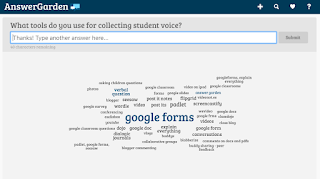
As someone who regularly sends out Google Forms to elicit student voice (generally regarding student engagement and learning), I was eager to attend Jan Marie Kellow's session 'Digital Tools for Student Voice'. This session started by looking at the use of some of my favourite tools; Google Forms (which I use heavily), Answer Garden (which I tend to use to gather prior knowledge) or Padlet (which I use as a sharing tool). Padlet We then looked at the use of Google Slides - which could be used similarly to Padlet, but with each child creating their own slide to respond to the prompt or question. While I do use Collaborative Google Slides, I had not thought of doing this before. At the same time, I use Google Draw pretty often, but I had not thought of using a collaborative draw in a similar manner to AnswerGarden. I quite like this idea as the students could easily save it to their drives and reflect on it in the future. Some other ideas that I enjoyed were usi...

Unconference: Hangarau Matihiko

Image
This afternoon I elected to investigate Hangarau Matihiko or the Digital Curriculum. I went in feeling quite comfortable designing and developing digital outcomes, but feeling like I need some support to incorporate computational thinking into my teaching. I was also curious to see how this might look in Māori medium schools and what the reo behind this might be. I was really excited to learn some kupu hou that involved technology - things like Netflix (Haoata), Google (Kūkara) and Meme (atakata). I thought that these would be wonderful to incorporate in my classroom as we so often use these kupu. It was really interesting to learn how these new words are created and approved. We looked at some Māori contexts that could be used to teach computational thinking or te whakaaro rorohiko, such as placing mattresses in the Marae, setting a table, making Kai, flax weaving. The more relevant we can make that computational thinking, the more engaging it can be. It is all about ...

GAFE Summit Keynote

Image
Kicking off today's GAFE or EdTech conference at Aorere College was keynote speaker Patrick Green. This keynote was entitled "the relevant teacher" and it focussed on the changing nature of the education system. Patrick took us through some examples of innovative 21st century schools and the way that they have adapted their practice. For example, Sequoyah school in California hold students back twice throughout their schooling to ensure that each child experiences failure and leadership.  He looked at the changing role of teaching and discussed the acts of a relevant teacher. This is a person who questions their content and pedagogy, considering whether what they are teaching will be relevant and helpful to their students. Is it worthwhile teaching students information that they can access through Google at any time? Relevant teachers are aware that students can gather information at any time online and expects students to answer their own questions, to take owne...

Manaiakalani Case Study Teachers

Image
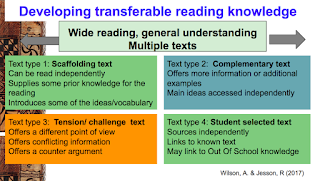
One of the benefits of working in a COL like Manaiakalani is that there is a constant supply of research regarding what is working and why. This afternoon I attended a session facilitated by some of the Woolf Fisher researchers regarding the practice of educators whose students made accelerated progress last year. The research was split into three categories - how teachers were generating and using tasks, texts and time. Some of the main traits of these teachers were: - They created tasks that required the students to think critically and deeply. For example, they were asked to compare and contrast information as opposed to simply retelling it. - They used the 'wide and deep' strategy. That is, they engaged with more than one text regarding a topic and then using this information to analyse the concept in depth.These included multi-modal text. - They offered multiple opportunities for collaboration. This could be at both the 'Learn' and 'Create' stage ...

Design Thinking at KPMG

Image
Today has been both fustrating and rewarding, as I have spent the day grappling with big issues with the Manaiakalani Innovative Teachers. The purpose of the day has been 'design thinking' to think of a prototype that would address the problem that we have identified. We were fortunate enough to spend this time at KPMG with Justine Todd. My original problem was looking at the connection between Intermediate and High School, as I was concerned that my students were not being adequately prepared to meet the literary demands of college. However, as I explored the problem in greater depth, I realised that this was just one of the affects of the true issue, outlined below. I then gathered information about this issue by talking to a range of experts in the field and collecting more data. I realised that my students struggle to use academic language and to comprehend the language of learning. This means that they use a lot of colloquial terms in their writing and that it is n...

Future Focussed?

Image
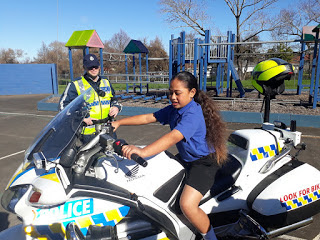
This year I have ensured to cover careers education, as I understand the importance of providing these opportunities for my learners. The Ministry of Education explain that students need to be aware of different career pathways and the knowledge and skills that are required to follow various career paths. It can also support students to be more motivated about school and higher education. This term I have done a lot more work in this area than I had previously and I introduced a range of occupations to my learners, from architecture to engineering to working for the police. As a school we have invited lots of different individuals and organisations in to talk to our students about their careers. I have found that this has had a positive impact on my learners, as they are far more aware of the different avenues that they could pursue. I found that they particularly learnt a lot from the engineer that I put them in contact with. He reported the importance of maths and physics for e...

Stepping Up

Image
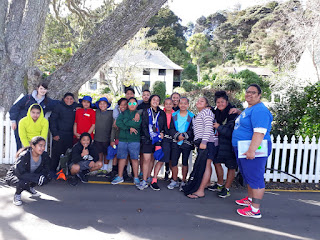
Like most new teachers, I tend to find school trips pretty stressful. I take frequent head counts of the children, have a bit of a korero beforehand about my expectations and how the day will run and I keep my tamariki close to me at all times. However, up until this point my school trips have been pretty simple to manage. I have often been accompanied by several other classes (and teachers) and I often only have to guide my students through an enclosed and controlled area, such as a museum or theatre. That all changed this week as I escorted the year sevens from my class on a week long camp to the Bay of Islands. This camp would involve kayaking, spending the night in the bush and visiting numerous locations. The thought of this was pretty daunting and I even had a few nightmares in the week leading up to the camp! I was all too aware of the headlines about disasters that had occurred during school camps. I was also a little worried that my students would begin to forget some of t...