Posts

Showing posts with the label LHypothesise

The Nature of my Inquiry Challenge

 Throughout term one, I collected and analysed sources of student data to identify what was causing my students progress in reading to stall. I used both summative/formative assessment (PAT/ Probe/ ARBs/ Student's learning in class) and collected student voice through an interview and survey.  I analysed some of these in greater depth and posted about them here and here . In this post I will be looking at the trends I discovered after analysing all of my student data. This will enable me to identify the aspects of reading that my intervention needs to address, as I will be aware of the things that my students struggle with. Low motivation/ confidence From my student voice collection - both my interview and survey, the students expressed a disinterest in reading. Only one student reported reading for fun outside of literacy class and shared that reading is their favourite subject. The other students all shared that they prefer other subjects and don't feel very good about read...
Self Study: Reflecting on what I have learnt about my teaching

Over the last few weeks, I have been conducting a mini inquiry to identify trends in my current practice. One limitation that I have had throughout this inquiry is that I am focussing on my literacy practice but currently do not have my literacy class (and will have gone almost a term without teaching them). Instead, I have been analysing my literacy practice with my maths class, which may slightly alter what I notice. I am aware of this and will be conducting some further data gathering at the start of next term, to get some more baseline data for my inquiry and to reflect further on my practice. I used three sources of data to inform this inquiry, a student voice survey, an analysis of my planning/ student activities and an observation of my teaching. I have interpreted each of these independently and I am now making connections between them and the literature that I have read on this topic. My focus question for this was: how am I supporting my students to monitor their own unde...

Self Assessment; Whats going on with my learning design?

I am currently examining my own practice to identify how my teacher actions relate to my hypothesis. I believe that I am not supporting my students to self-regulate as they read, neither from teaching enough reading strategies that support this, nor by teaching self-regulation explicitly. After viewing videos of my practice, I could clearly see that I was not teaching these strategies in person. I was scaffolding my students a lot, asking my own questions to help prompt them to make sense of the text, instead of getting them to do this themselves. I believed that I was teaching 'clarifying' and 'questioning' strategies through reciprocal reading, but I actually put most of the focus on 'predicting' and 'summarising' instead. I wondered if any of the activities or independent tasks included these strategies, so I began to look at these next. I was sure I remembered asking a question somewhere about the students understanding of the text... To make i...

Self Assessment: what's going on with my teaching?

After exploring the research, building my student profiles and hypothesising about my problem, it is time to think critically about my own practice. So far I believe that my students are not metacognitive readers. They don't consider whether or not they have understood something and they don't go back and reread when they are confused. This also means they aren't using strategies like questioning on their own. In other words - I'm not teaching them to self regulate, or supporting them to select the strategy they need! When researching I stumbled a lot about how reciprocal reading can be helpful at supporting kids to self regulate as they read (alongside the explicit teaching of self-regulation). This got me wondering how well I was really using reciprocal reading these days.  Fortunately, I have two reciprocal reading videos from my literacy classes from the past couple of years. Thanks Class OnAir!                       ...

Diving into the Research!

So far in my inquiry I have been gathering information about my learners reading habits. I have a bit of a hypothesis related to these learner profiles; that they are reading texts quickly and not monitoring their understanding of what they read. This week I have turned to the literature to gather more insight into how to support my students to comprehend independently. I wanted to learn more about reading strategies and self regulation. Metacognitive Reading Strategies Can Improve Self-Regulation . Susan Nash-Ditzel (2014) This case study followed college students (with average results in a foundation programme) who participated in a reading course aimed to support self-regulation. They learnt strategies such as considering prior knowledge/ background information about the text, questioning, identifying main ideas and inferencing. They were taught to monitor their own reading over the course of a year. I quite liked reading the literature review in this article, as it discusse...

Nature and Extent of the Student Challenge

My inquiry is concerned with reading; particularly with my students abilities to comprehend independently. So far I have considered the possible reasons that are preventing my students from fully comprehending new texts. I am now stepping back and reflecting on the extent of this challenge. Last year I inquired into reading and found that some of my students struggled simply to summarise a text and consider what they had learnt from reading. I tackled this by increasing their mileage and reducing the amount of time they spent on comprehension activities. As a result, their reading progress was accelerated and they were more able to discuss texts. However, when we removed the scaffolding of group discussion, these students did not perform so well. While I had taught them to discuss texts, to share their opinions and to summarise what they had read, I didn't teach them how to monitor their own reading. As such, in the PAT tests, many of them skimmed the texts and missed some plot...

Informing my Inquiry

How can I support my students to make sense of a range of texts independently?  So far in my inquiry, I have come to the realisation that while my students are able to discuss texts with others and do well in Probe testing (with an external tester), they struggle in PAT testing. My hunch is that my students are supported by discursive nature of Probe, but they struggle to access the deeper meaning of texts when alone. I also wonder if they struggle when presented with a range of texts and text types, as in class/ the probe test they are able to focus on one text and dedicate more time to making sense of it. It is now time to start collecting data to prove/ disprove my hunches and find out where my students struggle. These are the methods of data collection that I have been considering: e-asTTle Reading While I have the PAT results for my class, I would like more insight into the type of questions that my students struggle with. I know that e-asTTles marking console illustr...

How will my Inquiry Make a Difference?

I am determined to lift the achievement of my students in reading, to the extent that it makes a difference to their Star and PAT Comprehension test results. This is important as our year 7/8 results in both my school and the cluster have shown to be lagging behind the younger year levels. I have started by looking closer into the tests themselves, as I noticed that our running records and in class observations do not always align with the results we get for PAT. I discussed the tests with other teachers, senior management and I've looked at some research. See my blog post about this here. I know from my conversations with the other teachers in my team and Y7/8 teachers across the cluster that this is a common issue. I believe if I can try an approach and demonstrate shift in my end of year PAT and Star data, then I can take my findings to my colleagues. It is important to note that I am not looking for a new way to teach reading, nor do I believe that we have been doing anythi...

PAT Reading: What is going on!?

Does assessment data always accurately reflect the capabilities of our learners? As teachers we use multiple data sources to inform our  OTJs, in order to account for the odd bad day or fluke test. But when we know we had positive testing conditions and that our children are motivated, we cannot dismiss our results. Last year I felt that my class had performed really well in reading. Their class work, learning conversations, increased interest in reading and running records (which are administered by a relief teacher) all pointed towards positive shift. We used even used Read Theory, a website not too dissimilar to the PAT tests, to practice for them. So I was really disappointed when the results came back - most of my learners results demonstrated they'd made average shifts, despite some increasing their reading age by over two years. What does the research say? Corkey (2014) studied the PAT results of a group of year 8 students who were stronger decoders than comprehenders. ...

My CoL Inquiry 2020

Image
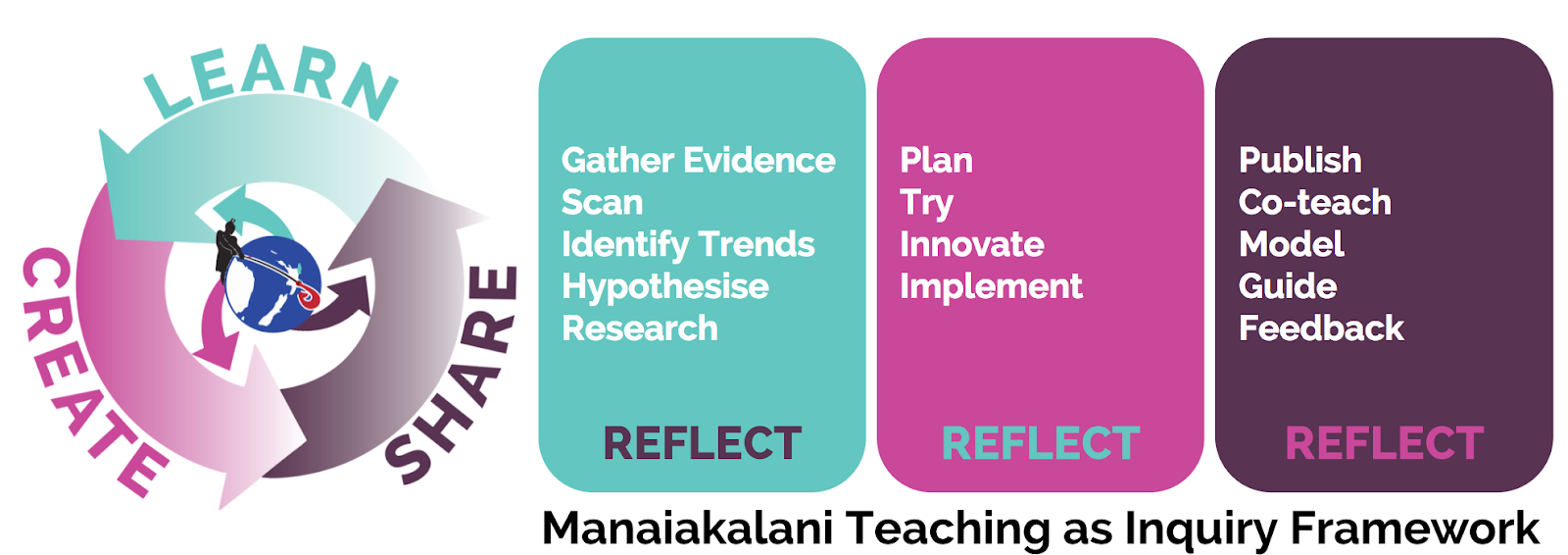
My 2020 CoL Inquiry Focus: “Will reading across the curriculum lead to improved reading outcomes?" The Manaiakalani Community of Learning is working together on this task using the expertise existing in of our community of learning. I have selected the achievement challenge of:  Increase the achievement in Years 7-10, in Reading, Writing, and Maths, as measured against National Standards and agreed targets. The teaching as inquiry framework I will continue to use in 2020 has been specifically co-constructed for Manaiakalani schools using our familiar Learn Create Share structure. Throughout the year, I will be labelling my blog posts to reflect our Learn, Create, Share structure. LEvidence Learn - Gather Evidence CPlan Create - Make a plan SPublish Share - Publish LScan Learn - Scan CTry Create - Try new things SCoteach Share - Co-teach LTrend Learn - Identify Trends CInnovate Create - Innov...